
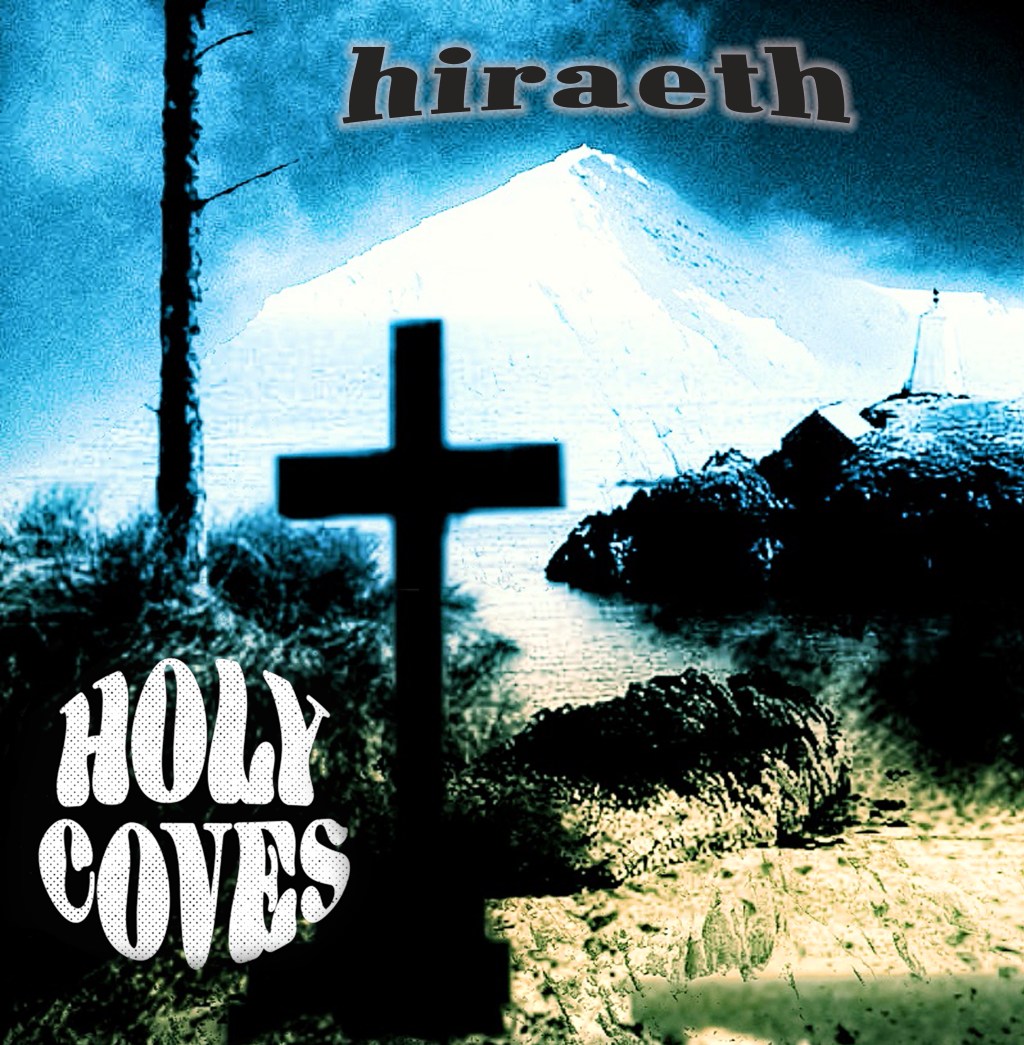
Few words carry the emotional weight of hiraeth. Often described as a longing for home, its true meaning reaches deeper: grief for what has disappeared, yearning for somewhere that may never have existed and an unbreakable connection to the landscape that shaped you.
It is an ideal title for Holy Coves’ fourth album. Written during an extraordinarily difficult period in frontman Scott Marsden’s life, including the death of his mother shortly before recording, Hiraeth confronts childhood trauma, addiction, family, mortality and belonging. Recorded on Anglesey and mixed and mastered in Austin, Texas by Erik Wofford, the resulting nine tracks form the band’s most ambitious and emotionally exposed work to date.
Stretching across almost 56 minutes, this is emphatically an album: patiently constructed, carefully sequenced and best experienced as one continuous journey. Holy Coves still possess the guitar-heavy force that powered Druids and Bards, but here it is expanded through psychedelia, Americana, folk, spacious atmospherics and something the band describe as “Awen rock”—music shaped by unrestrained creative energy.
1. This Stone Is Heavy
Hiraeth begins beneath an imposing weight.
At more than six minutes, “This Stone Is Heavy” establishes the album’s expansive dimensions immediately. Rather than rushing towards a conventional chorus, Holy Coves allow the track to gather mass gradually. Guitars stretch across the mix in thick, psychedelic layers while the bass and drums create a slow, inexorable forward pull.
Scott Marsden’s vocal sounds weathered but resolute, carrying the sense of someone attempting to move while burdened by memories that refuse to loosen their grip. The stone becomes a potent metaphor: grief, responsibility and inherited pain compressed into something physical.
As the arrangement intensifies, the guitars become increasingly turbulent. What begins as introspection develops into a formidable, guitar-drenched workout, its final passages sounding less like the weight has been lifted than the band have discovered the strength to carry it. It is a bold opening statement—brooding, uncompromising and deliberately enormous.
2. Travelling
Built around shimmering Americana textutes and country-tinged guitar work, Traveling revels a laid back, rolling rhythm and a warmer more melodic side. There is still melancholy embedded within the music, but the song moves with an easy, open-road momentum: basslines roll beneath jangling guitars while the drums maintain a steady, unfussy pulse.
Written as a message from Marsden to his son during a difficult custody battle, the song’s tenderness is strengthened by its restraint. It never becomes overly sentimental. Instead, the gently soaring chorus turns physical distance into an expression of enduring connection.
The contrast with “This Stone Is Heavy” is crucial. One song feels rooted beneath an unbearable burden; the next begins moving towards the horizon. Its sunlit surface may initially make “Travelling” appear like the album’s most accessible moment, but beneath that warmth sits fear, separation and paternal love. It is precisely that tension which makes the song resonate.
3. The Breeze
“The Breeze” extends the album’s brighter passage, carrying a looseness that feels almost liberating.
The guitars are lighter and more fluid, spreading around the rhythm section rather than bearing down upon it. Marsden’s vocal inhabits the additional space, while the melody carries a subtle sense of wonder. Its images of fantasy, freedom and surrendering to the elements connect the internal world of the record to the Anglesey landscape surrounding it.
Yet Holy Coves avoid turning the song into uncomplicated escapism. There is an undercurrent of uncertainty beneath its melodic lift—as if the freedom being described is still something the narrator is learning to trust. The guitar solo, arriving at the mid-point, feels fluid and unhurried, favouring expression over technical showmanship. Built around sustained notes, melodic bends and gently psychedelic phrasing, it seems to float above the rhythm section rather than overpower it. There’s a warm, blues-inflected quality to the playing, while the spacious tone gives each note room to hang in the air.
The performance has an organic, communal quality. Drums land with authority, bass gives the track its shape and flashes of guitar colour drift through the arrangement like sunlight moving across water. “The Breeze” sounds effortless, but its position is carefully judged: a fleeting clearing before Hiraeth begins moving into considerably darker territory.
4. Darkest Home
Darekest Homes, comes flying out of the blocks with taut drums and a brooding bassline, surrounded by layers of distorted guitar, while slide-like guitar swells and a shadowy synth bed give the track its haunted, claustrophobic sound bite. Darkest Home examines what happens when the place intended to provide safety becomes inseparable from pain. The song carries frustration, isolation and the sense of old wounds being reopened. It provides one of the record’s most important contradictions: you can love the place that formed you while still recognising the damage contained within it.
5. Which Way the Weather
At eight and a half minutes, “Which Way the Weather” is Hiraeth’s towering centrepiece.
Its opening is spacious and patient, with Holy Coves allowing atmosphere to accumulate before revealing the track’s full scale. Guitar lines hang suspended in the air, the percussion initially holding back as Marsden’s vocal searches for stability.
“Weather” becomes another expression of emotional uncertainty. Direction can change without warning; calm can become chaos; survival often depends upon recognising which way the wind is turning. Those ideas mirror an album written while life repeatedly disrupted the band’s attempts to retreat into their rehearsal room.
Around its midpoint, the song begins to transform. The rhythm section grows heavier, guitars multiply and the earlier restraint is gradually swallowed by a widescreen psychedelic surge. Holy Coves understand that an extended track must earn its length: every layer increases the pressure until the song feels capable of engulfing the listener.
There are echoes of classic psychedelic and progressive rock, but the landscape remains unmistakably Welsh: mountains, coastline and rapidly changing skies translated into sound. Monumental without becoming self-indulgent, it is the album’s defining piece.
This record means everything to me, Hiraeth is something I’ve been feeling for years as an adult but didn’t really understand fully when I was younger, it’s hard to put into words exactly what it means, it’s more of a feeling. For me it’s in the mountains, the forests, the trees, the meadows, the rivers, the beaches and the sea. It’s in everything I see that’s beautiful, the echoes of what was once there before me, my ancestors, I feel it deeply.
Scott Marsden on Hiraeth
6. Something in the Trees
If “Which Way the Weather” surveys the landscape from a distance, “Something in the Trees” steps directly into it.
There is an eerie, watchful quality to the track. Its guitars shimmer and circle rather than immediately attacking, creating the sensation that something remains concealed just beyond sight. The rhythm section supplies a hypnotic pulse while Marsden’s vocal carries both fascination and apprehension.
The arrangement is particularly effective in its use of space. Around the middle, the music recedes noticeably, generating an uneasy pause before the full band returns with renewed force. That shift makes the later passages feel larger and more threatening.
Nature throughout Hiraeth is neither background decoration nor a simple source of comfort. It holds memories, ancestors and unseen histories. On “Something in the Trees,” that connection becomes almost supernatural—as though the landscape is observing the people passing through it.
The result sits somewhere between psychedelic rock, dark folk and a half-remembered local legend. It is one of the album’s most immersive moments.
7. Hole
Bursting with energy throughout Hole is one of the standout releases of the album. It’s built around brooding guitars and a weighty spacious arrangement. It’s packed full of emotion, and built around taut drumming a muscular bassline and the repeated “How does it feel?” refrain, the song examines destructive cycles: addiction, toxic relationships, self-pity and the moment when personal accountability becomes unavoidable. The repetition is essential. Rather than using the central question as a straightforward hook, Holy Coves turn it into an interrogation. Each return feels increasingly uncomfortable, as though the narrator is being forced to confront an answer he has spent years avoiding.
Musically, “Hole” is among the album’s leanest tracks. The drums remain prominent and powerful, while the guitars favour controlled pressure over the sprawling atmospherics heard elsewhere. It gives the song a blunt physicality. There may be light at the end of the tunnel, but Holy Coves refuse to pretend that reaching it is easy

8. Falling Down
The lead single for the album, Falling Down revels he tragedy buried beneath much of Hiraeth.
Lyrically the song is a haunting tribute to Scott’s uncle Tony, who was pulled out to sea on a family holiday and sadly and whose body was never recovered. That loss reverberated through the family and contributed to Marsden’s own lifelong fear of the sea. The track is full of reverb drenched guitars, a deep roaring bassline and pulsing drums that provide a hypnotic quality to the song. Knowing that history gives the track considerable emotional gravity, but the music carries its power independently. “Falling Down” is immediate and forceful, propelled by pounding drums, dark guitar textures and a vocal that feels caught between anger, terror and acceptance.
The coastal imagery running through the album becomes frightening here. Water is no longer cleansing or picturesque; it is uncontrollable, capable of taking someone away and leaving generations to live with the absence.
Its chorus provides one of Hiraeth’s most powerful releases, yet there is no cheap resolution. The track does not attempt to repair the past. Instead, it names the trauma and brings it into the open. That act of recognition becomes its own form of liberation.
9. Where the Heart Is
After the intensity of “Falling Down,” the album closes by returning to its central question: what—and where—is home?
“Where the Heart Is” begins with striking restraint. The quieter opening creates the impression of someone surveying everything that has preceded it: grief, distance, family, landscape and the cycles which pass between generations.
The arrangement gradually expands, adding weight without disturbing the song’s reflective character. Marsden’s vocal is weary but warmer here, carrying hard-earned acceptance rather than easy optimism. When the guitars rise, they no longer sound as oppressive as they did on “This Stone Is Heavy.” They feel expansive, reaching outward.
That change completes the album’s arc. Hiraeth begins with something burdensome and immovable; it concludes with the possibility that home can be carried internally—in memory, love, landscape and the people whose presence continues after they have gone.
The final moments do not tie every thread into a neat conclusion. They simply allow the music to recede, leaving behind the same mixture of comfort and ache contained within the album’s title.

Hiraeth is Holy Coves’ most complete and courageous record. In a world where everything needs to happen now, Hiraeth goes against the grain, demading patience s rewarded by an album with genuine scale and emotional continuity. These songs do not merely share a sonic palette; they speak to one another, repeatedly returning to home, landscape, inherited trauma and the possibility of breaking destructive cycles.
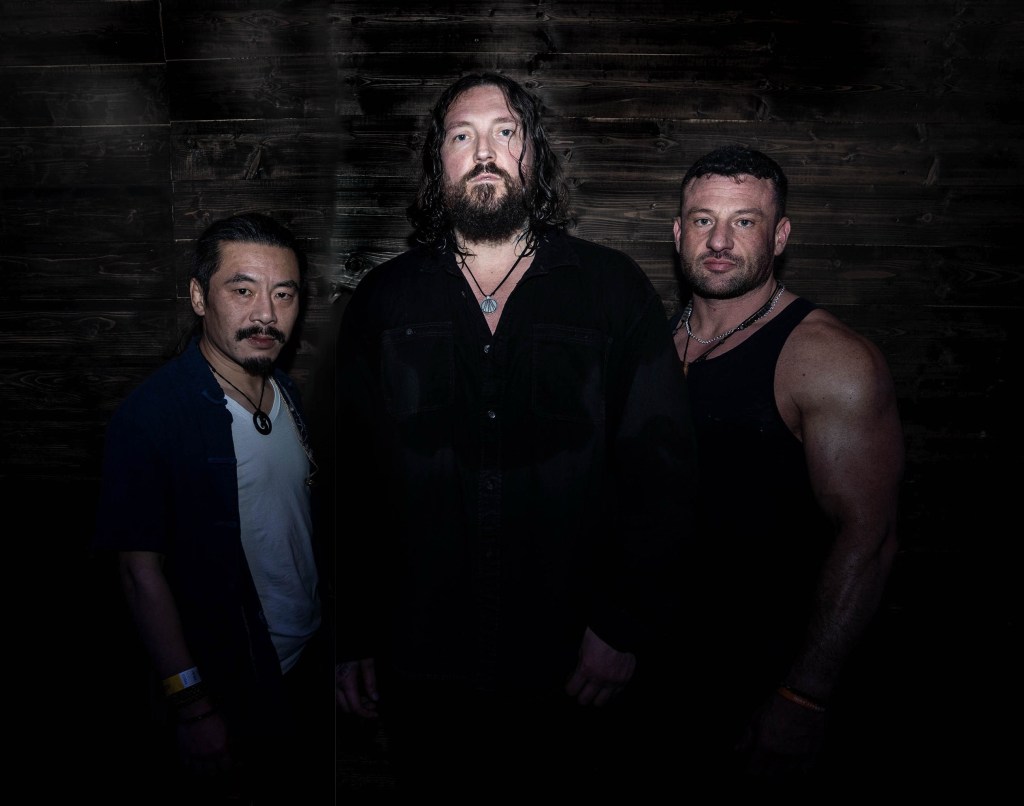
The band’s muscular rhythm section of Jay Demarco (Drums) and Yan Shi (Bass), prevents the expansive arrangements from drifting, while the guitars move between Americana warmth, dark psychedelia and immense walls of sound. At its centre stands Scott Marsden(vocals/guitar), writing with brutal openness but refusing to turn personal tragedy into spectacle.
Rather than offering a nostalgic version of home, Hiraeth recognises it as something more complicated: a place of beauty and pain, belonging and absence, memory and loss. Holy Coves have taken those contradictions and built their finest album around them.
Hierath isn eleased on Friday 14th August and is availble to pre order now.
Holy Coves are undertaking a series of in-store shows to promote the album. Tickets are on sale here.
Holy Coves Socials


Leave a comment